Water-Resistant Sunscreen: What 40 and 80 Minutes Mean
Reading the water-resistance line on a sunscreen label.
We may earn a commission when you buy through links on this page, at no extra cost to you. This does not change which products we cover. How we make money.
What the label means
FDA says there is no waterproof sunscreen. A product labeled water resistant must pass a required test and state either 40 or 80 minutes.
Examples
- Blue Lizard Sensitive SPF 50 lists 80 minutes.
- Neutrogena Sheer Zinc SPF 50 lists 80 minutes.
- EltaMD UV Clear is not water resistant.
Compare them in best mineral sunscreens and EltaMD vs Anthelios.
Reapply
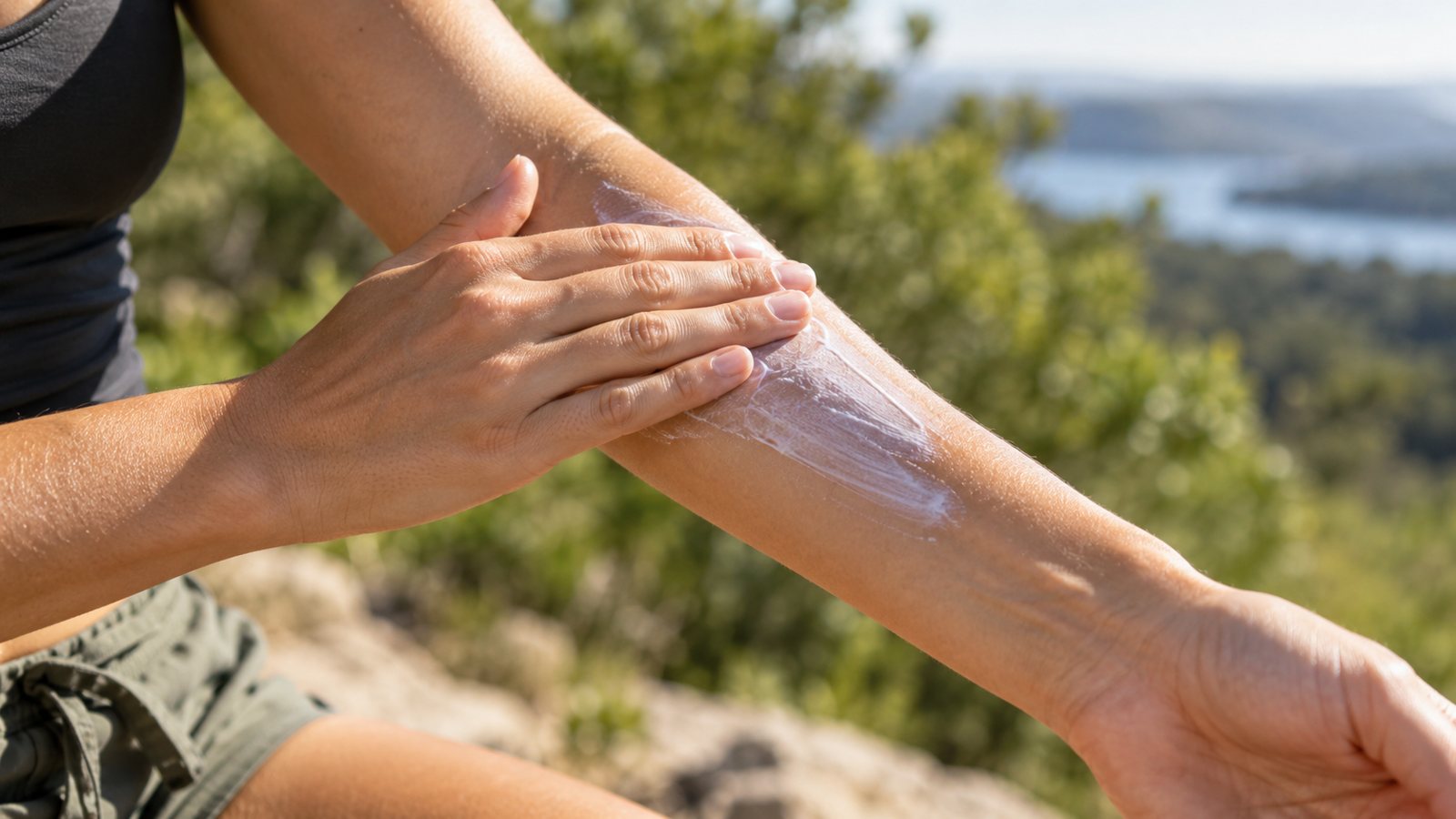
Reapply after the stated time in water, right after towel drying, and at least every two hours. See how to apply sunscreen and how to choose sunscreen.
Why “waterproof” is not allowed
The FDA says no sunscreen is waterproof, because all sunscreens eventually wash off. A water-resistance claim must be backed by the required test procedure. The label must also say whether the protection lasts 40 or 80 minutes while swimming or sweating.
Reading the label
| Label wording | What it means, per FDA |
|---|---|
| “Water resistant (40 minutes)” | Stayed effective for 40 minutes of swimming or sweating in the required test |
| “Water resistant (80 minutes)” | Stayed effective for 80 minutes in the same test |
| No water-resistance claim | Not shown to hold up in water; reapply after any swimming or sweating |
| Reapplication directions | Required on every sunscreen, water resistant or not |
The water-resistance time is about water and sweat. It does not extend the two-hour reapplication rule. The FDA says to reapply at least every two hours, and more often when swimming or sweating.
When water resistance matters
The AAD recommends a water-resistant, broad-spectrum sunscreen with SPF 30 or higher for most outdoor use. It also says to reapply immediately after swimming or sweating. Toweling off can rub sunscreen away, so reapply after drying even if the labeled time has not run out.
Plan around peak sun
The FDA notes that the sun’s intensity depends on the time of day and on location. Its sun-safety tips say to limit time outside between 10 a.m. and 2 p.m. For a pool or beach day, combine water-resistant sunscreen with shade, a broad-brimmed hat, sunglasses and covering clothing.
Other label points to check
- Broad spectrum. The FDA says SPF mainly measures UVB protection. “Broad spectrum” means the product also protects against UVA.
- Expiration. A sunscreen without a date should be treated as expired three years after purchase.
- Storage. In the heat, keep bottles in the shade or wrapped in a towel. Labels must say to protect the product from excessive heat and direct sun.
- Sprays. If the label carries a flammability warning, keep it away from flames. Never spray it directly on your face.
Babies
The FDA does not recommend sunscreen for infants under six months. Keep them out of the sun and ask a doctor. For children over six months, use the product as directed on its Drug Facts label.
Frequently asked questions
Is any sunscreen waterproof?
No. FDA says all sunscreens eventually wash off.
What does 80 minutes mean?
The product was tested to stay effective for 80 minutes of swimming or sweating. Reapply after that time.